
The Last Mandarin by Louise Penny and Mellissa Fung: Book Review
Looks Like Books contains affiliate links and is a member of the Amazon Services LLC Associates Program. If you make a purchase using one of these affiliate links I may receive compensation at no extra cost to you. See my Disclaimer to learn more.
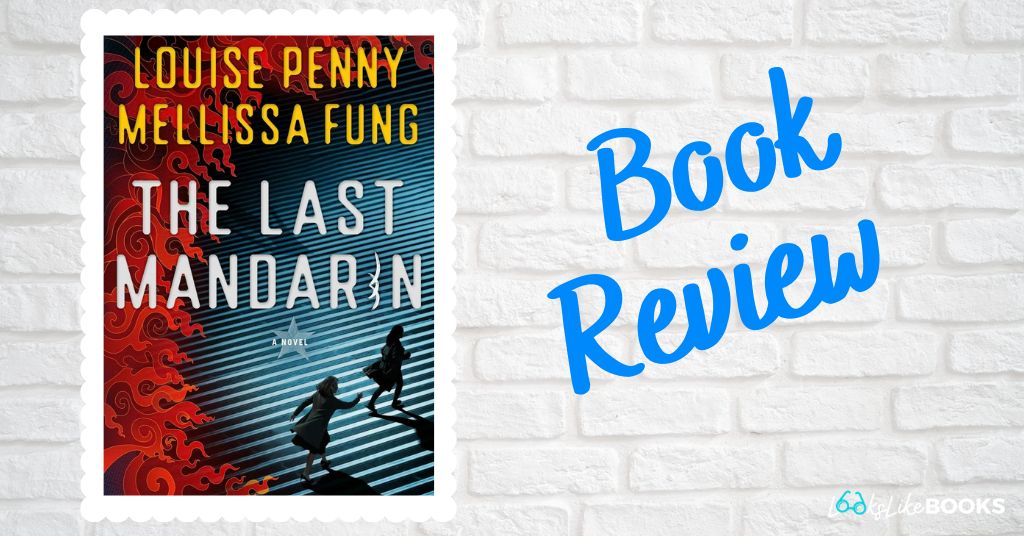
The Last Mandarin by Louise Penny and Mellissa Fung is a fast-paced international political thriller that combines modern-day intrigue with the fascinating history of China’s first emperor and the Terracotta Warriors.
I already love a good international political thriller, so this one was right up my alley. It took me a little while to settle into the story with its Chinese names, changing viewpoints, and shifting scenes, but once I did, I was hooked. The suspense builds throughout the book, the historical elements sent me down more than one Google rabbit hole, and by the final stretch, I could barely turn the pages fast enough.
My Take: A smart, fast-moving international political thriller that blends modern-day suspense with fascinating Chinese history. It took me a little while to find my footing, but once I did, this became a true page-turner. My Verdict? Read.

What Is The Last Mandarin About?
Alice is a young Chinese-American woman with a complicated relationship with her mother, Vivien, a powerful and emotionally distant woman whom Alice has never felt particularly close to.
When the two meet, their strained mother-daughter relationship is apparent almost immediately. But before the first chapter is even over, something happens that makes it clear there is much more going on than family tension.
From there, Alice is drawn into a dangerous world of secrets and international intrigue that reaches far beyond anything she expected.
Woven into the modern-day story is the history of Qin Shi Huang, the first emperor of a unified China, and the extraordinary Terracotta Army created to guard his tomb. As the story moves between its characters and locations, ancient history and present-day political maneuvering become increasingly intertwined.
And that’s about as much as I’m willing to say. This is definitely a book where discovering what happens is part of the fun.
The Last Mandarin – What I Liked
A Political Thriller That Moves
I love a good international political thriller, and once The Last Mandarin got going, it delivered exactly what I wanted.
The intrigue begins almost immediately, but the suspense continues to build as the story progresses. Instead of reaching a point near the end where I could feel things beginning to wind down, the opposite happened.
The stakes kept getting higher. The pace kept getting faster. And just when I thought I knew where things were headed, there was more.
By the final part of the book, this was a genuine page-turner for me.
Short Chapters and Lots of Dialogue
This is always a winning combination for me.
The chapters are relatively short, there’s plenty of dialogue, and the story moves frequently between scenes and viewpoints. Once I became accustomed to the characters and the structure, those quick shifts helped make the book feel even faster.
It’s the kind of writing style that makes it very easy to say, “I’ll read one more chapter.” And then another.
Alice and Vivien
The complicated relationship between Alice and her mother gives the story an interesting personal dimension alongside the much larger political plot.
I liked Alice almost immediately. Vivien was another matter. At least through Alice’s eyes, her mother initially comes across as cold and difficult to understand, and it isn’t hard to see why their relationship is so strained.
I don’t want to say much more than that because learning about these characters is part of the story. But I liked having that mother-daughter relationship running through a thriller dealing with events on a much larger scale.
The Chinese History
This may have been my favorite part of the entire book. China’s first emperor, Qin Shi Huang, figures prominently in the historical background of the story, as do the famous Terracotta Warriors discovered near his tomb in Xi’an.
I knew about the Terracotta Warriors, of course, but I didn’t know nearly as much about the emperor himself or the history surrounding them. The book had me stopping to Google people, places, and events to find out more.
Those are some of my favorite books – the ones that entertain me while simultaneously sending me off to research something I didn’t know much about before.
Even better, the historical material doesn’t feel tacked onto the thriller simply to give it an interesting setting. Penny and Fung use that history as an integral part of the contemporary story, weaving ancient China into a modern international thriller in a way I thought was incredibly clever.
The Suspense Just Kept Escalating
This deserves its own mention because it was one of the things I enjoyed most.
There comes a point in many thrillers when you can sense that the story has reached its climax and is beginning to move toward the resolution.
I kept expecting that to happen here. Instead, The Last Mandarin seemed to accelerate.
The intrigue became more intense, the pace picked up, and the story kept moving right through the final stretch. I was completely invested by then and didn’t want to put it down.
The Last Mandarin – What I Didn’t Like
Honestly? Not much.
The only difficulty I had came fairly early in the book. There are quite a few Chinese names to keep straight, along with frequent changes in scene and viewpoint, and it took me a little while to get everyone sorted out in my head.
For a short time, I had to pay closer attention than I normally do when starting a thriller. But that was temporary.
Once I became familiar with the characters and settled into the rhythm of the story, it wasn’t a problem at all. In fact, those same scene and viewpoint changes eventually became part of what made the book move so quickly for me.
So I can’t really point to anything in The Last Mandarin that I genuinely disliked.
I loved this book.
The Last Mandarin – Read, Re-read, or Reconsider?
Read.
This one was an easy decision.
The Last Mandarin gave me the international intrigue I love in a political thriller, but the Chinese history made it even more interesting. I loved the way the story incorporated China’s first emperor and the Terracotta Warriors into a modern-day suspense plot, and I especially loved that it made me curious enough to start looking things up on my own.
The beginning required a little concentration while I sorted out the characters and viewpoints, but once everything clicked, I was all in.
And the farther I got, the faster I read.
Frequently Asked Questions About The Last Mandarin
Is The Last Mandarin part of the Inspector Gamache series?
No. The Last Mandarin is a standalone political thriller by Louise Penny and Mellissa Fung and is separate from Penny’s Inspector Gamache/Three Pines series.
You don’t need to have read any of the Gamache books before starting this one.
Who wrote The Last Mandarin?
The Last Mandarin was co-written by Louise Penny and Canadian journalist Mellissa Fung. Penny is best known for her Inspector Gamache mystery series, while Fung’s background as an international journalist brings another perspective to this story of global politics and intrigue.
Is The Last Mandarin based on real Chinese history?
The novel is fiction, but important parts of its historical backdrop are real.
Qin Shi Huang was the first emperor to unify China, and the enormous Terracotta Army buried near his mausoleum in Xi’an was created more than two thousand years ago. The thousands of life-sized figures were intended to accompany and protect the emperor in the afterlife. That combination of real history and fictional international intrigue was one of my favorite things about the book—and had me doing plenty of Googling while I read.
Is The Last Mandarin a historical fiction novel?
Not primarily. I’d classify it as a contemporary international political thriller.
However, Chinese history plays a significant role in the story, particularly the history surrounding China’s first emperor and the Terracotta Warriors. If you’re a historical fiction reader who also enjoys thrillers, that crossover may be part of the book’s appeal.
Is The Last Mandarin fast-paced?
Yes, although it took me a little while to settle into it. There are multiple characters, Chinese names, locations, and changing viewpoints to become familiar with at the beginning. Once I had everyone straight, though, I found the book very fast-paced.
The short chapters and plentiful dialogue kept things moving, and the suspense accelerated considerably as the story progressed.
Is The Last Mandarin similar to State of Terror?
Both are standalone political thrillers co-written by Louise Penny and deal with international intrigue rather than the quieter murder mysteries of her Inspector Gamache series. They’re different stories with different characters, but readers who enjoyed seeing Penny venture outside Three Pines in State of Terror may be particularly interested in The Last Mandarin.
Is The Last Mandarin Worth Reading?
Absolutely.
If you enjoy international political thrillers, The Last Mandarin is well worth reading. And if, like me, you love a novel that leaves you wanting to learn more about the real history behind the story, it’s even better.
I’ll admit that I needed a little time at the beginning to get comfortable with the Chinese names, characters, and changing viewpoints. But once I did, that small hurdle disappeared.
What followed was exactly the kind of thriller I love: short chapters, lots of dialogue, international intrigue, interesting characters, fascinating historical connections, and suspense that builds rather than lets up.
The history of China’s first emperor and the Terracotta Warriors added another dimension entirely. I found myself repeatedly stopping to look things up, which only made me more interested in what I was reading.
And then came the final stretch. Instead of gradually winding down, the story seemed to move faster and faster. By that point, I wasn’t just enjoying The Last Mandarin.
I couldn’t put it down.
What To Read Next
- State of Terror by Hillary Rodham Clinton and Louise Penny – The obvious next choice if you want another Louise Penny political thriller. It’s another fast-paced story of international intrigue, political maneuvering, and escalating danger.
- The Final Act of Juliette Willoughby by Ellery Lloyd – A great choice if you especially enjoyed the historical elements of The Last Mandarin. This layered mystery combines a present-day investigation with art, history, long-buried secrets, and plenty to unravel.
- Saltwater by Katy Hays – Another twisty mystery that gradually reveals a much bigger story, with complicated relationships, secrets, and plenty of reasons to keep turning the pages.
- The Rose Code by Kate Quinn – If the real history was one of your favorite parts of The Last Mandarin, try this WWII historical thriller centered around the codebreakers of Bletchley Park. It’s suspenseful, fascinating, and another one that may send you off to learn more about the real history behind the story.